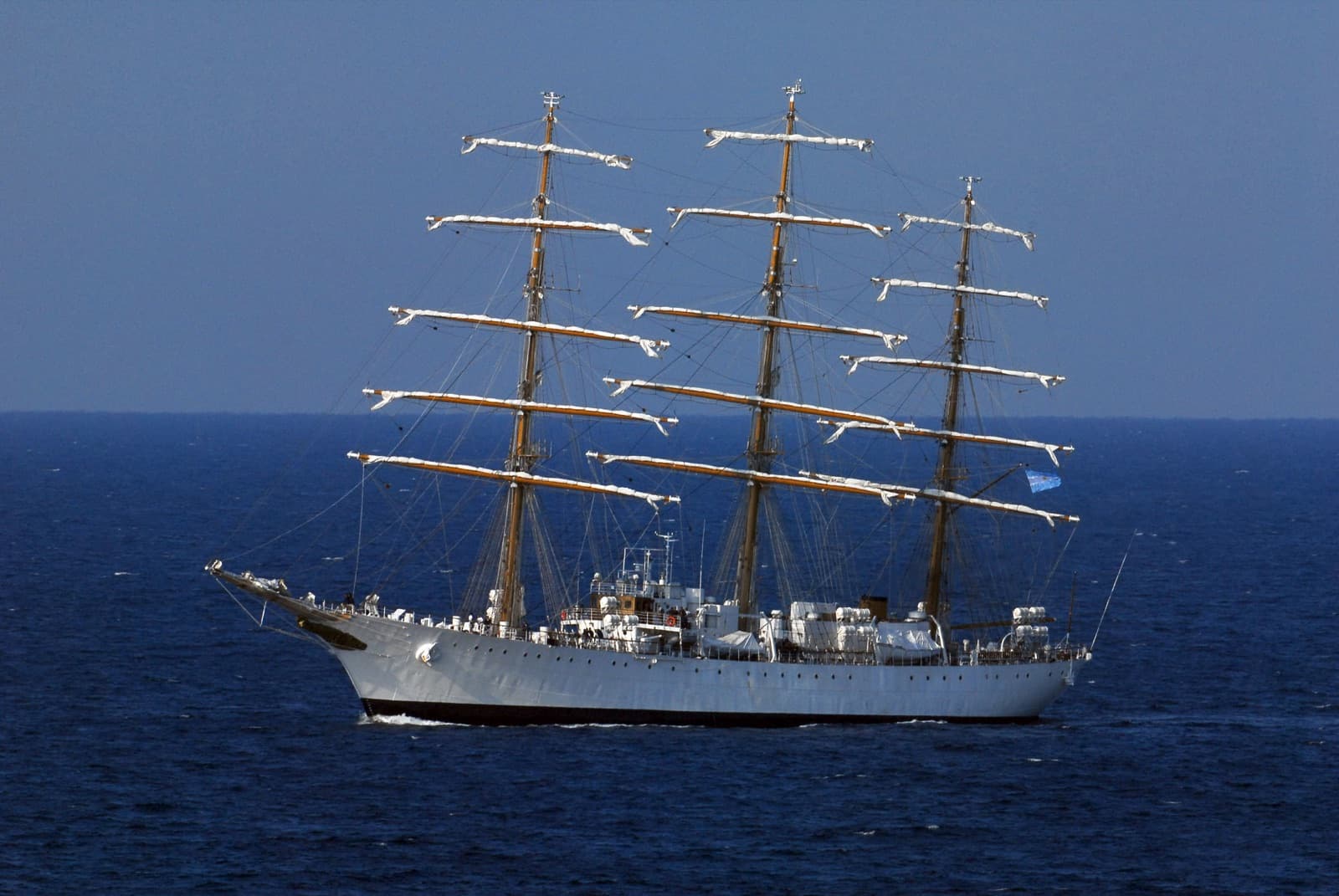
On 2 September 2026, Norwegian authorities arrested the Russian research vessel Professor Molchanov while it was docked in Barentsburg, Svalbard. The measure was taken at the request of Ukraine's Naftogaz Group, which is seeking to enforce an arbitral award of approximately USD 4.22 billion, plus interest and costs, against the Russian Federation.
For Argentine readers, the episode invites an immediate comparison. In 2012, NML Capital obtained the detention of the Argentine naval frigate ARA Libertad in Ghana to enforce judgments arising from Argentina's defaulted sovereign bonds. Argentina secured the vessel's release through proceedings before the International Tribunal for the Law of the Sea.
The two cases begin from a similar factual pattern: a creditor, an unpaid sovereign debt or award, and a State-owned vessel found in a foreign port. The similarity may end there. ARA Libertad was a commissioned warship entitled to a particularly extensive immunity. Professor Molchanov is described as a State-owned research vessel, but it has also been used for passenger transport and commercial expedition cruises. Its immunity may therefore depend on questions of use and purpose that did not arise in the Argentine case.
Norway arrests the vessel to secure an arbitral award
According to the Governor of Svalbard, the Nord-Troms and Senja District Court issued an arrest order on 31 August 2026. The Governor, acting as the local enforcement authority, implemented the order two days later. The vessel must remain in Barentsburg until the court or the Governor decides otherwise.
Naftogaz states that the arrest forms part of its efforts to enforce an investment arbitration award arising from Russia's expropriation of the group's assets in Crimea. The arbitration was brought under the 1998 bilateral investment treaty between Ukraine and Russia. According to Naftogaz, the award had already been recognized as enforceable in Norway before the vessel was arrested.
The available statements describe Professor Molchanov as property of the Russian Federation. Russian official sources identify it more specifically as a vessel belonging to the Northern Administration for Hydrometeorology and Environmental Monitoring, within Roshydromet. It has served as a platform for scientific and educational expeditions. It has also reportedly carried passengers and cargo between Murmansk and Barentsburg and been used for commercial expedition cruises.
That mixed operational history is likely to matter. Ownership by a foreign State is only the beginning of the immunity analysis.
The Norwegian court's order has not been made publicly available. It is therefore not yet possible to determine whether the court heard or decided a Russian immunity objection, how it characterized the vessel's use, or whether the arrest was granted provisionally pending a fuller examination. The arrest should not be reported as a final determination that the vessel is available for execution.
The arrest of ARA Libertad
In October 2012, ARA Libertad entered the Port of Tema in Ghana as part of a training voyage. NML Capital, which held judgments against Argentina in New York, obtained an order from a Ghanaian court detaining the vessel.
Argentina argued that the frigate was a warship and enjoyed immunity from attachment under both the United Nations Convention on the Law of the Sea and customary international law. It initiated arbitration against Ghana under Annex VII of UNCLOS and requested provisional measures from ITLOS while that tribunal was being constituted.
On 15 December 2012, ITLOS unanimously ordered Ghana to release the frigate immediately and unconditionally, ensure that it and its crew could leave the port, and provide the necessary supplies for that purpose.
The Tribunal's reasoning was closely tied to the vessel's status. It found that a warship is an expression of the sovereignty of the State whose flag it flies and that, under general international law, warships enjoy immunity, including in internal waters. It also considered that Ghana's measures prevented Argentina from discharging its sovereign functions and created a risk of irreparable prejudice.
The ITLOS order did not establish a general rule protecting every State-owned ship from attachment. It addressed a vessel falling within the UNCLOS definition of a warship and the specific immunities attached to that status.
The case continued briefly before an Annex VII tribunal. In June 2013, the Supreme Court of Ghana held that the frigate could not be seized in execution of a judgment. Argentina and Ghana subsequently settled the inter-State dispute. The Permanent Court of Arbitration recorded that Ghana's Supreme Court judgment reflected Ghanaian law on the detention of warships and was based on customary international law concerning warship immunity.
Why Argentina's waiver did not expose the frigate
The dispute also illustrates the difference between immunity from jurisdiction and immunity from execution.
Argentina had agreed to jurisdiction in the bond documentation and had waived sovereign immunity in broad terms. Those provisions allowed NML Capital to sue Argentina and obtain judgments. They did not necessarily make every category of Argentine State property available to satisfy those judgments.
Measures of execution against sovereign property are ordinarily subject to stricter rules than proceedings to determine a State's liability. Some assets remain protected because of their governmental function even where a State has consented to adjudication or waived immunity in general language. Diplomatic property, central-bank reserves and military assets are familiar examples.
ARA Libertad fell within the specially protected category of warships. The Ghanaian proceedings could not convert an enforceable debt into authority to detain an instrument through which Argentina exercised sovereign and military functions.
This distinction remains relevant in the Naftogaz proceedings. Russia's participation in the investment treaty regime, the jurisdiction of the arbitral tribunal and the recognition of the award in Norway concern whether the award can be enforced as a legal title. They do not, without more, determine whether a particular Russian asset may be attached or sold.
State ownership does not answer the immunity question
Contemporary State-immunity law generally follows a restrictive approach. A foreign State retains extensive protection for property used for governmental, non-commercial purposes, while property used commercially may be exposed to measures of constraint under specified conditions.
Articles 18 to 21 of the United Nations Convention on Jurisdictional Immunities of States and Their Property provide a useful statement of this structure. They distinguish pre-judgment measures from post-judgment execution and protect property used for governmental, non-commercial purposes. They also identify certain categories deserving particular protection, including military property, diplomatic assets and central-bank property.
The Convention does not supply a mechanical answer to the Norwegian dispute. Its application, status and relationship with customary international law must be considered together with Norwegian law. It nevertheless identifies the questions that a court generally needs to confront before permitting execution against sovereign property.
The classification of Professor Molchanov is more difficult than that of ARA Libertad. A research vessel owned by a State agency may perform public scientific functions. That description does not necessarily resolve the matter if the same ship is operated commercially, carries paying passengers or is assigned to regular passenger and cargo services.
Nor is the receipt of revenue necessarily conclusive in the opposite direction. A governmental operation can involve payments, tickets or the carriage of private persons without losing its public character. The court may need to examine who operates the ship, the legal basis of that operation, the purpose of the voyage, how revenues are allocated and the use or intended use of the vessel at the relevant time.
The disclosed facts also raise a separate ownership issue. Public statements variously describe the vessel as owned by the Russian Federation, belonging to a Roshydromet administration, and operated by the State trust Arktikugol. For immunity and execution purposes, the legal relationship among the Russian Federation, its agencies and the operator may matter. It may also affect whether Norwegian law requires a connection between the property and the entity against which the award is being enforced.
Why Professor Molchanov may not follow ARA Libertad
Russia has characterized the arrest as unlawful and has invoked the vessel's sovereign and scientific character. Its representatives have indicated that the order will be challenged. Those objections cannot be assessed fully without the Norwegian decision and the evidence presented to the court.
The strongest analogy with ARA Libertad is procedural and conceptual. Both disputes require a court to ask whether the enforcement rights of a creditor stop at the boundary created by the immunity of State property. Both also show that obtaining a judgment or award against a sovereign is different from locating assets that may lawfully be used to satisfy it.
The decisive difference concerns the character of the asset. The Argentine frigate was indisputably a warship. ITLOS could rely on the special status and function of such vessels. Professor Molchanov, by contrast, appears to have served several purposes. If the Norwegian courts find that it was in use or intended for commercial activity, its claim to immunity from execution may be materially weaker.
If they find that it was assigned to public scientific work or a governmental supply mission, the arrest will raise a more difficult question. The result may then turn on the precise test under Norwegian law, the relevance of intended and actual use, and whether any rule applicable in Svalbard affects the analysis.
The Svalbard location adds political sensitivity, but it should not obscure the legal issue. The arrest was carried out against a vessel in port pursuant to a domestic court order. It is not a high-seas interdiction, and Russia's use of the term "piracy" does not correspond to the legal definition of piracy under UNCLOS.
What to watch in the Norwegian proceedings
The next decisions should clarify whether the initial arrest survives an immunity challenge. Five matters deserve particular attention: (i) the evidence of ownership and the legal status of Roshydromet and Arktikugol; (ii) the vessel's actual and intended use when it was arrested; (iii) whether its scientific, passenger and supply functions are separable or form part of a single governmental operation; (iv) the conditions Norwegian law imposes on attachment and execution against foreign State property; and (v) whether the vessel could ultimately be sold, rather than merely detained while the parties litigate those questions.
ARA Libertad demonstrates that a valid claim against a State does not make all State assets executable. It does not establish that every State-owned vessel enjoys the immunity of a warship. The proceedings concerning Professor Molchanov will test the boundary between those propositions.
For creditors enforcing awards against States, and for sovereigns operating vessels abroad, that boundary has immediate consequences. Before seeking or resisting an arrest, the parties must establish more than ownership. They need evidence concerning the vessel's legal classification, operator, current mission, revenue arrangements and intended use. In this field, the function performed by the asset may determine whether an enforceable award can be converted into an effective recovery.