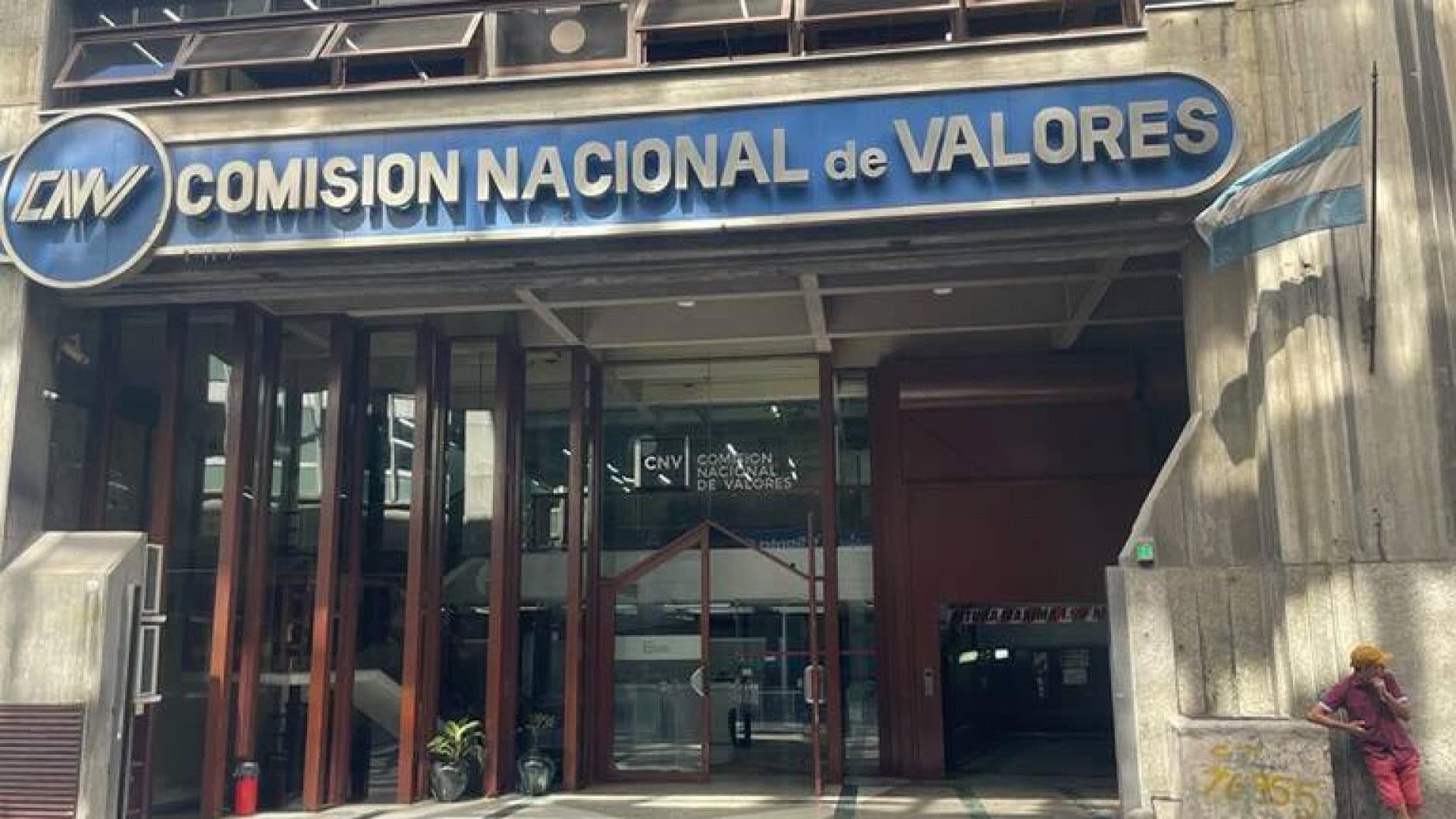
On September 15, 2026, Argentina's Securities Commission (Comisión Nacional de Valores, or CNV) enacted General Resolution No. 1166/2026, once again changing the rules governing how CNV-registered obligated entities may receive funds from and deliver funds to their clients.
The change is straightforward: subject to the specific exceptions contained in the rule, transfers are now the only permitted method for moving client funds in and out. Physical checks and electronic checks, known locally as eCheqs, may therefore no longer be used to fund or withdraw money from a brokerage account.
The rule represents a significant reversal of a framework that the CNV itself had introduced only four months earlier. It has also prompted a negative response from parts of Argentina's financial community, particularly because of its potential effect on corporate and SME liquidity management.
What General Resolution 1166/2026 changes
General Resolution 1166 replaces Article 3 of Section II, Title XI of the CNV Rules and requires CNV-registered obligated entities, as applicable, to use transfers exclusively when receiving funds from or making payments to clients.
As a general rule, funds must originate from a sight bank account owned or co-owned by the client at an institution authorized by the Central Bank of Argentina (BCRA), or from a CVU associated with the client's Argentine tax identification number (CUIT), subject to the identification and traceability requirements established by the regulation.
Payments to clients follow the same principle. They must be made to a sight bank account owned or co-owned by the client or to a qualifying CVU linked to that client. The rule maintains specific arrangements for certain agricultural market participants and foreign investors operating through local custodians.
In practice, the change is particularly relevant to settlement and clearing agents (Agentes de Liquidación y Compensación, or ALyCs) and to companies that had been using eCheqs to fund their brokerage accounts directly or receive funds from them.
The CNV has not banned the trading of eCheqs
General Resolution 1166 does not remove eCheqs from Argentina's capital markets.
The CNV expressly states in the recitals to the resolution that the new restriction does not affect the trading of deferred-payment checks under the applicable capital markets rules. Deferred-payment checks and eCheqs may therefore continue to be traded as financial instruments.
What has been eliminated is a different use of the instrument: a check may no longer serve as the payment rail through which a regulated entity receives funds from, or delivers funds to, a client.
The distinction matters. A company may still negotiate or discount an eCheq in the capital markets. What it can no longer do is use an eCheq instead of a transfer to fund or withdraw cash from its brokerage account.
A reversal of the framework introduced in May
The timing of the change has attracted almost as much attention as the substance of the rule.
In May 2026, the CNV issued General Resolution 1139, expressly recognizing electronic checks as an authorized method for receiving and delivering client funds. The rule also provided that no limit would apply to the number of endorsements of an eCheq, provided that its traceability could be ensured.
Only days later, General Resolution 1141 clarified the framework and maintained a limit of two check payments per client per day, whether made through physical or electronic checks, while leaving the unlimited-endorsement rule for eCheqs in place.
General Resolution 1166 now removes checks entirely from the permitted methods for these client fund movements.
In less than four months, the regulatory framework therefore moved from expressly expanding the use of eCheqs in this context to excluding them altogether as a mechanism for receiving and delivering client funds.
The CNV's stated rationale
The CNV's formal explanation focuses on operational certainty and controls.
According to the resolution and the regulator's accompanying announcement, requiring transfers is intended to ensure the immediate availability of funds, eliminate the risk of rejected checks and strengthen identification, traceability and control mechanisms. The resolution also refers to the need to prevent undesirable practices arising from the framework introduced under the earlier rules.
The CNV does not identify tax revenue as a reason for the change.
That, however, has not been the predominant interpretation among market participants.
Argentina's bank debit and credit tax and the market reaction
Much of the criticism has focused on Argentina's Tax on Credits and Debits in Bank Accounts and Other Transactions, commonly known as the "check tax."
Law No. 25,413 generally taxes credits and debits in covered accounts, subject to a substantial number of exemptions and special regimes. The general regulatory rate is 0.6% on credits and 0.6% on debits.
The endorsement of a check, by contrast, is excluded from certain taxable fund-movement rules under ARCA's implementing regulations.
That distinction had allowed companies that regularly collect and pay through eCheqs to structure their short-term liquidity more efficiently.
Under the previous CNV framework, a company receiving an eCheq could endorse it directly to an ALyC and bring the value into the capital markets without first depositing the check into its own bank account. The company could then place the proceeds temporarily in a money market fund or another short-term instrument and, under certain structures, later use a check to move the funds onward.
The economics were particularly relevant for working capital held for only a few days. If accessing a short-term investment required the company first to generate taxable bank-account movements, the resulting tax cost could absorb a significant portion, and in some cases all, of the return generated during that period.
For that reason, a number of analysts and market participants have interpreted General Resolution 1166 as being aimed, at least partly, at closing this route. Bloomberg Línea reported widespread criticism and noted that market commentary linked the measure to recent real declines in revenues from the bank debit and credit tax. LA NACION reported a similar interpretation among financial market participants and advisers.
That perceived tax rationale is not, however, part of the CNV's express legal reasoning and should be distinguished from the regulator's official explanation.
Why the rule matters for SMEs
The consequences of General Resolution 1166 go beyond the technical question of which payment method can be used to fund a brokerage account.
For many businesses, particularly those receiving a significant portion of their commercial collections through checks, the eCheq had become a bridge between their ordinary payment cycle and the capital markets. It allowed short-term working capital to be invested without requiring the business to first change the payment instrument used throughout its commercial chain.
By requiring transfers, the new framework may reintroduce taxable bank-account movements into some structures, depending on the type of account, the taxpayer and the exemptions or reduced rates available in each case.
The impact will not be identical for every company. Argentina's bank debit and credit tax contains numerous exemptions, reduced rates and tax-credit mechanisms. But for certain treasury structures, the difference may materially affect whether investing very short-term liquidity remains economically worthwhile.
This is at the center of much of the market criticism: a rule formally intended to strengthen traceability and control may also increase the cost of connecting corporate working capital with capital markets instruments.
What companies and market participants should review
As of September 15, 2026, any treasury process relying on eCheqs to fund or withdraw money from brokerage accounts needs to be reassessed.
Companies that used these structures should determine how the transfer requirement affects their treasury flows and the tax treatment applicable to each bank movement. ALyCs and other regulated entities within the scope of the rule must likewise adapt their client funding and withdrawal procedures to the new Article 3 of Title XI.
It is equally important not to confuse this restriction with the trading of eCheqs themselves. Argentina's deferred-payment check market remains in place, and General Resolution 1166 does not amend the rules governing the negotiation of those instruments.
The practical question going forward is whether the additional traceability and control sought by the CNV will outweigh the additional friction created for corporate liquidity management and, in particular, for SME participation in Argentina's capital markets.
Photo: Gobierno argentino, CC BY 4.0, via Wikimedia Commons.