In this article, the authors comment on the award rendered in the Australis case and on the application to set aside the award filed against it before the courts of the seat of the arbitration, which remains pending.
Originally published in the Boletín de Arbitraje of ICC Argentina, 2026, No. 6, pp. 29-39. The Bulletin version includes the full footnote apparatus; the main sources are listed at the end of this note.
The recent award rendered in Food Investment SpA, Joyvio Group Co., Ltd. and BJ Joyvio Zhencheng Technology Co., Ltd. v. Isidoro Quiroga Moreno et al., known as the "Australis case" and decided in May 2025 by a tribunal of the Santiago Arbitration and Mediation Center, constitutes the largest private arbitration in Chile's history and a milestone for the contemporary understanding of complex disputes connected to the salmon farming industry. Beyond its economic and procedural significance, the case offers a privileged starting point for reflecting on issues that have acquired particular prominence in Argentina in recent years: the potential expansion of salmon farming in Patagonia, the tensions between creating incentives for foreign investment, the need to safeguard environmental and community interests, and the regulatory challenges associated with sensitive industries in ecologically fragile territories. This paper proposes to analyze the award from a comparative perspective, linking the Chilean experience with emerging Argentine debates in order to offer useful interpretive keys both for contractual and arbitral practice and for the design of public policy in natural resource sectors.
Overview of the Australis Case
The Australis case constitutes one of the most significant disputes in the recent history of the Chilean salmon farming industry and of commercial arbitration in the region. The conflict arose from the sale and purchase of Australis Seafoods and was structured around disputes over the information provided during the negotiation, the scope of the contractual warranties, and the existence of potential breaches connected to the company's productive and regulatory situation. Within this framework, the opposing parties represent actors of significant weight: on one side, Isidoro Quiroga, a Chilean businessman widely known for his diversification across multiple strategic sectors and high-volume operations; on the other, a consortium of Chinese companies, including Joyvio Group and BJ Joyvio Zhencheng Technology, which form part of a rapidly expanding investment ecosystem within the global fishing and aquaculture sector, particularly in South American markets.
From an institutional and procedural standpoint, the award has distinctive features. The decision was adopted by majority, with the votes of Pedro Pablo Vergara and Andrés Jana against the dissent of Ramón Cifuentes, reflecting a significant disagreement in the assessment of the evidence and the legal construction of the case. Moreover, the amount of the award reaches extraordinary figures, consolidating this arbitration as the largest in Chile's private history. Beyond its economic value, the significance of the case lies in how it exhibits the contemporary tensions present in highly regulated natural resource markets and in the interaction between local actors and foreign capital in strategic industries such as salmon farming.
Productive Context and Socio-Environmental Tensions in Chilean and Argentine Salmon Farming
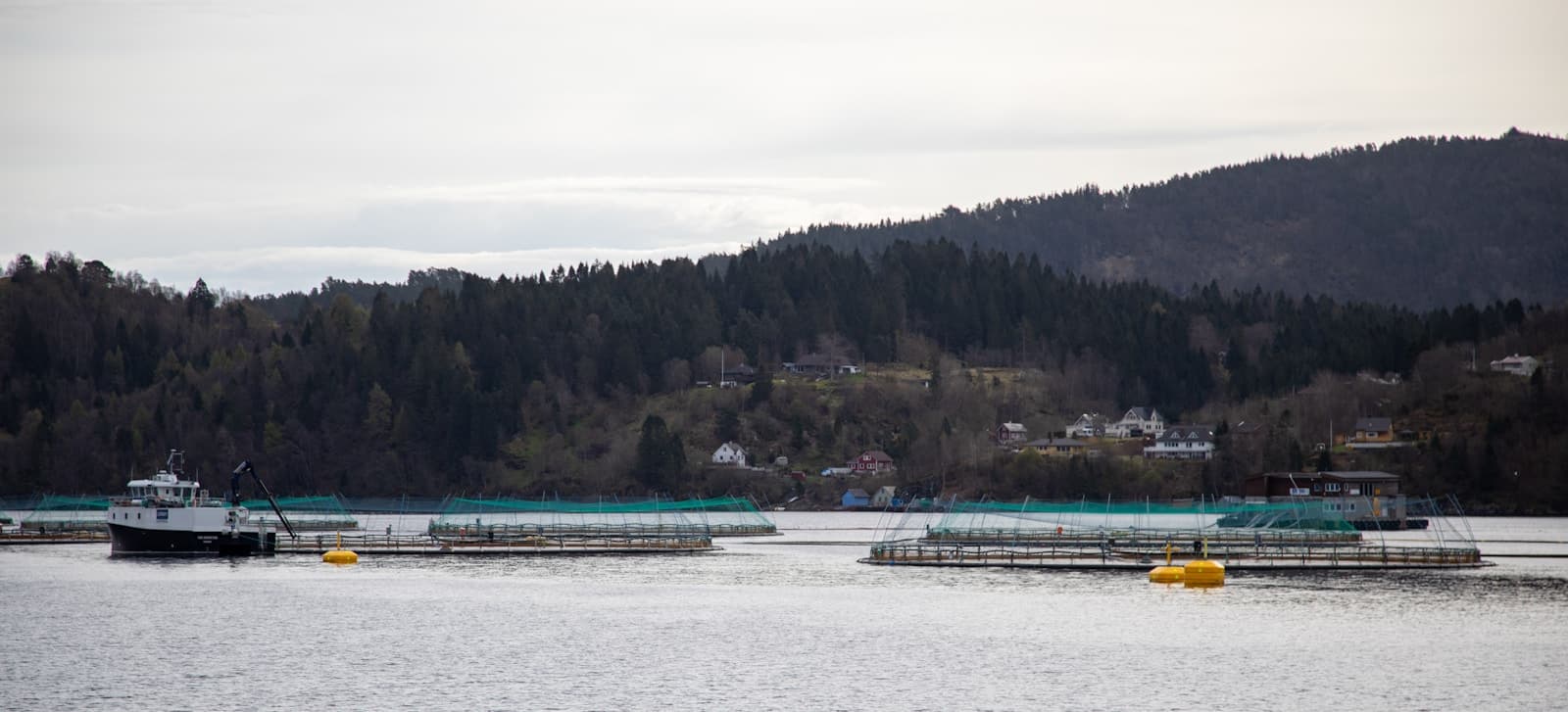
The salmon farming industry displays profoundly divergent trajectories in Chile and Argentina. Chile has consolidated its position as the world's second-largest salmon producer, with a highly integrated, export-oriented industry based on a complex regulatory framework under permanent revision. In 2023, national production exceeded one million tonnes and exports surpassed USD 6.3 billion, evidencing the sector's strategic role in the Chilean economy. Argentina, by contrast, lacks industrial marine production and has maintained in force since 2021 a legal prohibition on the installation of salmon farms in the Beagle Channel. Although some political sectors have pushed for the repeal of this rule in order to enable sustainable aquaculture schemes, these initiatives face significant resistance from local communities, scientists, and environmental organizations, which warn of the ecological and reputational risks of modifying a regulatory framework adopted unanimously following an extensive participatory process.
These differences are embedded in a broader socio-environmental tension: the pressure to expand aquatic food production against the simultaneous mandate to preserve fragile ecosystems and ensure sustainable practices. Chilean salmon farming has generated a set of documented concerns (including overproduction, intensive antibiotic use, eutrophication, mass mortality events, and conflicts with tourism) that fuel Argentine opposition to the installation of sea cages. This social and environmental conflict, however, does not merely shape public debate; it also has a direct bearing on the contractual structure of the industry. The Australis case illustrates how the existence or suspicion of regulatory and environmental risks can affect the valuation of regulated companies, disclosure duties in mergers and acquisitions processes, and the allocation of risks between seller and buyer. The Chilean experience thus makes it possible to anticipate that any eventual salmon farming development in Argentina will reproduce similar tensions.
The Australis Award
The Australis award addresses a set of classic doctrinal questions of contemporary contract law, centered on the tension between contractual warranties and information asymmetries in the negotiation and due diligence process. The central point of the dispute is whether the sellers failed to disclose relevant information, particularly regarding the regulatory and productive risks of Australis. The Tribunal concludes that there were indeed omissions and inaccuracies in the representations of clause 4.2 of the Stock Purchase Agreement (hereinafter, the "SPA") relating to environmental and productive compliance, thereby constituting a breach of contract. The omissions consisted in the fact that, although the company stocked fish in accordance with the Technical Projects and the Environmental Qualification Resolution (hereinafter, the "RCA"), it produced above the authorized limits, a situation that generated a real risk of sanctions which the sellers "had well-founded suspicions of" but did not disclose to the buyers. The Tribunal emphasizes that such information was difficult to detect through a standard due diligence by the buyer, thereby underscoring the notion of information asymmetry and the protective function of contractual warranties.
A second relevant axis concerns the change of criterion by the Chilean environmental authority. The evidence revealed that, starting in 2019-2020, the Superintendency of the Environment began to sanction not only overstocking but also overproduction per se, even absent environmental harm and by means of automated documentary cross-checks, which constituted a substantive regulatory change relative to historical practice. The Tribunal itself acknowledges that "there was a change of criterion (...) that had an economic impact on the valuation" of Australis and of the sector. This change, however, did not exonerate the seller: the central point is that, before the closing of the transaction, there existed a well-founded suspicion of excessive overproduction (40% to 100% at some sites) which the sellers did not disclose. In this sense, the problem combines future regulatory risks with present disclosure duties.
Regarding the fraud allegations, the Tribunal rules out the existence of willful deceit (dolo), but nonetheless draws important legal consequences. On the one hand, it declares the 5% indemnification cap provided in the SPA inapplicable, not because it was invalid, but because the remedy adopted does not constitute a typical "indemnification" but rather a price adjustment based on the real value of the company at the time of the sale: the Tribunal rejects the application of that cap since "no award of damages will be granted in favor of the claimants; rather, it will be decided that the amount paid for the purchase under the rules set forth in the SPA should not have been the amount that was paid but a different one." In the same vein, the Tribunal notes that the failure to disclose the risk of a change of criterion justifies not applying the indemnification cap. This conceptual distinction between indemnification and determination of the correct price situates the award within the tradition that employs restitutionary remedies where the relevant information affects the valuation of the transferred or disputed asset.
An additional element of great significance in the award is the discussion of the action for termination (acción resolutoria) and its inapplicability in this case. Although the claimants argued that the breaches attributable to the seller warranted termination of the SPA, the Tribunal devotes an extensive part of its analysis to demonstrating why that remedy is not appropriate. This conclusion derives from an extensive analysis by the Tribunal. First, the Tribunal holds that the contract's representations and warranties do not constitute essential obligations whose breach would permit termination of the contract, as maintained both by the cited doctrine and by the legal expert reports submitted by the parties. Second, the Tribunal emphasizes that the company had changed substantially since the acquisition, which made it impossible to restore the parties to the pre-contractual state and frustrated the very function of termination. Finally, the Tribunal rules out the existence of willful deceit. Consequently, the Tribunal concludes that the appropriate solution is not termination of the contract but an adjustment of the price to reflect the real value of the company at the time of the sale, which directly grounds the restitutionary remedy adopted in the award.
On valuation, the Tribunal draws a sharp distinction between two analytical periods: the period prior to the signing and execution of the SPA (the stage of formation of consent) and the subsequent period, once Joyvio had already acquired control of Australis. The Tribunal stresses that only the first period is legally relevant for determining whether the sellers omitted material information or engaged in conduct affecting the intent to contract, since willful deceit, if it exists, must precede the contract. By contrast, events occurring after the Public Tender Offer (when the company was managed by the buyers themselves) cannot be attributed to the seller or used to reconstruct the original valuation or to impute concealments ex post. This temporal separation operates as the guiding criterion of the evidentiary analysis and explains why certain subsequent irregularities, though significant in operational terms, have no bearing on the determination of the breach or on the quantification of the remedy.
Finally, the Tribunal analyzes the legal effects of the provision of incomplete or inaccurate information, and holds that the claimants should be granted compensation equivalent to the excess price paid, measured by reference to the real value per tonne (EV/Kg) considering the effective production limits authorized in 2019. The analysis includes a detailed technical adjustment of the difference between the production "seen" by the buyer and what could actually be produced without infringing the RCAs, which transforms the core of the remedy into an adjusted valuation exercise. Taken together, these elements make the case a paradigmatic study of how the lack of disclosure and regulatory changes impact the structure of contractual risk, the valuation of regulated companies, and the allocation of responsibilities in complex transnational transactions.
The Application to Set Aside the Award and Its Procedural and Systemic Implications
The application to set aside the award (recurso de nulidad) filed by Isidoro Quiroga's defense before the Santiago Court of Appeals challenges the award rendered in the Australis case on the basis of an alleged serious and manifest violation of the fundamental principles and rules of Chilean law. The setting-aside application rests on the fact that a partial restitution of the price was ordered which was neither requested nor debated by the parties, which, according to the application, entails an alteration of the original contractual object. The filing of this application makes clear that what is being litigated is not only quantum or liability, but also the integrity of the arbitral proceedings and respect for the principle of congruence between what was requested and what was granted. This heightens the institutional dimension of the arbitration and raises questions about the predictability and stability of the mechanism for the parties, which may affect investor confidence in Chile as a forum.
The content of the setting-aside application filed by Quiroga's defense revolves around two main axes. The first is the alleged decisional incongruence, based on the argument that the Tribunal granted a remedy (specifically, the partial restitution of the price through a valuation adjustment) which, according to the applicants, was not expressly requested by the parties nor debated within the arbitral proceedings. In the applicants' view, this would constitute an excess of the arbitral mandate and a violation of the principle of congruence, by altering the object of the dispute and replacing the requested damages with a calculation mechanism provided for neither in the contract nor in the procedural claims. The second axis relates to an alleged violation of essential due process guarantees, in particular the right of defense and the right to be heard, since the methodology employed by the Tribunal to determine the "correct" price (including the EV/Kg analysis, the regulatory limits, and the authorized production scenarios) allegedly introduced technical and legal elements that the respondents did not have sufficient opportunity to contest. Taken together, the application maintains that these alleged procedural and substantive infringements constitute grounds for setting aside under Chile's Law 19,971, which would justify the total or partial annulment of the award.
On the procedural level, the setting-aside application filed by Isidoro Quiroga's defense is currently pending before the Santiago Court of Appeals, the court with jurisdiction over actions to set aside arbitral awards rendered in Chile pursuant to Law No. 19,971 on International Commercial Arbitration. To date, the Court has declared the application admissible, which means that it must rule on the merits of the grounds invoked. Both parties have appeared in the judicial proceedings, and the court has recognized them as parties. At this stage, neither the facts nor the evidentiary assessment carried out by the arbitral tribunal are reviewed; the only question is whether the award falls within any of the exhaustive grounds for setting aside provided by law, particularly those relating to excess of the arbitral mandate, violation of due process, or infringement of international public policy.
The specific issue that the Court of Appeals must resolve follows from three grounds for setting aside invoked by the applicants. First, Isidoro Quiroga's defense maintains that its client was unable to "assert his rights," such that the ground for setting aside provided in Article 34(2)(a)(ii) of the Chilean Law on International Commercial Arbitration would be established. Specifically, the applicant alleges that he was unable to exercise his right to be heard because the award contains "surprise decisions" regarding the restitution of the price, the limitation of losses, and the failure to apply the contractual time limit for asserting claims. Second, the applicant maintains that the award contains decisions exceeding the scope of the arbitration agreement, which would establish the ground for setting aside contained in Article 34(2)(a)(iii) of the same law. In this regard, he argues that the award "contains decisions that exceed the terms of the arbitration agreement" since the tribunal ordered an economic remedy that had not been requested by the parties. Finally, the applicant relied on Article 34(2)(b)(ii) of the Law on Commercial Arbitration and argued that the award is contrary to Chilean public policy, for two independent reasons. First, he maintained that the award violates public policy through the "manifest" violation of the principles of adversarial proceedings and congruence. Second, he argued that the award must be set aside for violating the principle of pacta sunt servanda, maintaining that the tribunal decided without respecting the stipulations of the contract by failing to apply contractual liability-limitation clauses.
If the application is rejected, the award will become final and fully enforceable in Chile and abroad under the New York Convention; otherwise, an eventual setting aside (total or partial) would open a scenario of high legal and reputational complexity, both for the parties and for the Chilean arbitral system. In either scenario, the Court's decision will not only have inter partes effects, but will also set a relevant precedent on the scope of judicial review of arbitral awards in Chile and the degree of deference that ordinary courts are willing to accord to arbitral decisions in high-value disputes of public sensitivity.
In substantive terms, what is currently in dispute is not the economic correctness of the award's outcome or the appreciation of the facts or the evidence (matters excluded from judicial review), but the scope of the arbitral mandate and the limits of the tribunal's decision-making function. The core of the debate centers on whether the Arbitral Tribunal, in opting for a remedy of price adjustment and restitution of the excess paid, remained within the claims submitted by the parties or whether, on the contrary, it introduced an unsolicited solution that altered the object of the controversy. Relatedly, the question is examined whether the methodology used to determine the "correct price" respected the right of defense and the adversarial principle, or whether it entailed an autonomous reconstruction of the case that allegedly prevented the respondents from adequately contesting the decisional parameters. The Court will thus have to rule on a question of high sensitivity for arbitration in general: to what extent an arbitral tribunal may shape the applicable legal remedy on the basis of the proven facts without incurring incongruence, and what the threshold is at which a creative interpretation of the contract becomes an excess of mandate.
The relevance of the application for Chile as an arbitral seat is considerable, as the country has been consolidating an arbitration platform in Latin America resting on its special legislation and on the perception of neutrality, procedural efficiency, and legal certainty. If the ordinary courts begin to suspend or set aside awards on procedural grounds or on interpretations of congruence, the perception of elevated risk for investors choosing Santiago as a forum may take hold. In the same vein, this development acquires particular importance for Argentina: the recent regulatory discussion on salmon farming, the entry of foreign capital into the aquaculture sector, and the possibility of significant contractual disputes increase the need for a reliable and predictable arbitral framework. If Chile experiences institutional tensions in its arbitral regime, Argentina (already in the process of attracting investment in aquaculture) will have to pay even greater attention to the design of its own dispute resolution mechanisms, as well as to the forum the parties may agree upon and the enforcement guarantees that such forum provides.
The Scope of Review of the Arbitral Award: A Comparative View from Chile, Argentina, and the UNCITRAL Model Law
The Chilean regime of judicial review of awards is governed by Law No. 19,971 on International Commercial Arbitration, which substantially reproduces the UNCITRAL Model Law. Under this system, the only means of challenging an award is the application to set aside, which is exceptional in nature and limited to exhaustive grounds. Such application must be filed before the competent Court of Appeals, which may not review the merits of the case or re-examine the facts or the evidentiary assessment made by the arbitral tribunal. Judicial review is limited to verifying whether any of the grounds provided by law is present, such as the incapacity of the parties, the invalidity of the arbitration agreement, the lack of due process, the excess of the arbitral mandate, or the contravention of international public policy. This design reflects a clear legislative choice in favor of judicial deference to arbitration and the protection of the autonomy of the award as a final and binding decision.
In Argentina, judicial review of international arbitral awards is governed by Law No. 27,449 on International Commercial Arbitration, likewise based on the UNCITRAL Model Law. As in Chile, the application to set aside is the only means of challenging the award, with grounds practically identical to those provided in the Model Law. Jurisdiction lies with the judicial courts having jurisdiction at the place of arbitration, and review is strictly limited to the statutory grounds, excluding any review of the merits of the dispute. Nevertheless, the Argentine experience is still at a stage of jurisprudential consolidation, and local case law is in the process of consolidating clear criteria on the scope of international public policy, the notion of arbitral due process, and the limits of the excess of the arbitral mandate, issues that will be central in complex, high-value disputes similar to the Australis case.
From a comparative perspective, the UNCITRAL Model Law constitutes the common reference standard for both Chile and Argentina. Article 34 of the Model Law establishes a closed system of grounds for setting aside, inspired by the 1958 New York Convention, which seeks to balance the autonomy of arbitration with a minimum level of judicial review designed to preserve fundamental guarantees. Under this scheme, setting aside operates neither as an appeal nor as a substantive review, but as an external mechanism of legality control. The coherence between the Chilean and Argentine regimes reflects a normative convergence that favors predictability for the various actors of transnational commerce and investment, and reinforces the idea that state courts should not substitute their own judgment for that of the arbitral tribunal, even where they disagree with the solution reached.
Notwithstanding this normative convergence, the comparison between Chile and Argentina reveals potential differences in the practical risk of judicial review, which arise not from the rules themselves but from the jurisprudential tradition and the degree of deference of local courts. The Australis case brings into focus how, even under a Model Law-aligned regime, the discussion of incongruence, excess of mandate, and due process can acquire significant intensity when the award involves extraordinary amounts and economically sensitive sectors. For Argentina, where complex disputes are projected in regulated and environmentally contested industries, the Chilean experience serves as an early warning: the adoption of the Model Law does not eliminate the risk of post-award judicialization; rather, it requires consistent and predictable judicial practice to consolidate confidence in arbitration as a mechanism for resolving international disputes.
Regional Projections: Lessons from the Australis Case for the Argentine Context
The Australis case offers a privileged prism for observing how a private dispute in Chile reveals regulatory, economic, and socio-environmental dynamics that are already beginning to be reflected in Argentine debates over the expansion (or prohibition) of salmon farming in its territory. As mentioned, in Argentine Patagonia, particularly in Tierra del Fuego, the activity has been legally prohibited since 2021, in part due to pressure from environmental organizations, local communities, and tourism-related sectors. This express prohibition contrasts with the Chilean model, based on a robust, capital-intensive export industry subject to a complex interaction of permits, regulatory contingencies, and high levels of environmental scrutiny. The difference in political and productive orientations between the two countries around the same resource makes it possible to anticipate that eventual regulatory changes in Argentina (such as the current bills to enable RAS systems or to reinstate salmon farming in certain areas) could replicate tensions similar to those observed in Chile.
Socio-environmental tensions constitute, precisely, one of the central elements of the dialogue between the two contexts. In the Argentine south, environmental organizations and indigenous communities maintain a firm stance against any attempt to install salmon farms in open waters, invoking the preservation of fragile ecosystems and the rejection of the impacts documented in Chile: mass escapes, antibiotic use, eutrophication, mass mortality events, and conflicts with tourism. The Australis case demonstrates how environmental risks, even when they do not materialize into actual harm, can acquire contractual relevance insofar as they affect asset valuation, regulatory compliance, and the duty of disclosure. This connection raises an important question for Argentina: even without an operating marine salmon industry, the eventual emergence of projects could reproduce not only environmental tensions but also contractual or regulatory disputes connected to the handling of sensitive information, the interpretation of permits, and the scope of the warranties given in investment processes.
From the perspective of foreign investment, the case also illuminates challenges that could emerge in Argentina if it decides to reopen the productive debate. The entry of international capital (particularly from countries with active geoeconomic strategies in fishing and aquaculture, such as China) requires stable regulatory frameworks, clear evaluation criteria, and transparent environmental governance mechanisms. The Australis controversy reveals that, even under a consolidated regime such as Chile's, the existence of information asymmetries and changes of criterion by environmental authorities can trigger disputes of extremely high value. For Argentina, where the aquaculture regulatory framework is more incipient and the political discussion more volatile, the Chilean experience acts as a warning: without regulatory clarity, sufficient enforcement capacity, and legal certainty, the entry of large investors could generate complex litigation whose resolution would depend as much on contractual design as on the country's institutional strength.
A less visible but fundamental aspect is the comparative arbitral dimension. The filing of the setting-aside application in Chile (and the public attention surrounding it) has reactivated debates over the stability of Santiago as a regional arbitral seat. If Chilean courts perceive growing political, media, or economic pressures in high-impact arbitrations, this could erode confidence in the neutrality and predictability of the system, factors essential for attracting international transactions. For Argentina, this point is relevant for two reasons: first, because many investment and commercialization contracts in Patagonia are subject to international arbitration, and the choice of seat is a strategic element; second, because Argentina still lacks an arbitral seat with consolidated global prestige, which compels it to closely observe the Chilean evolution in order to decide whether to promote its own institutional strengthening or to continue depending on external seats.
Finally, the Australis case makes it possible to anticipate that, if Argentina enables new aquaculture developments, social and regional debates similar to those experienced in Chile could be reproduced: resistance from local communities, zoning conflicts, tensions between economic and environmental objectives, and challenges to the legitimacy of certain projects on grounds of ecological risk or cultural impact. In these scenarios, the Chilean precedent shows that controversies play out not only on the regulatory or social plane, but also on the contractual and arbitral plane. The case demonstrates how the lack of disclosure, regulatory volatility, and environmental pressure can converge in multi-million-dollar disputes that transcend the parties and put at stake the reputation of an arbitral seat and the coherence of a productive sector. Thus, the Australis award functions as both a mirror and a preview for Argentina: a reminder that the governance of natural resources in sensitive territories requires solid institutions, clear rules, and a deep understanding of the environmental, commercial, and litigation risks that accompany high-impact industries such as salmon farming.
Conclusion
The Australis case shows the extent to which disputes over extractive or capital-intensive aquaculture industries can no longer be read merely as "private" contractual conflicts. The award articulates, within a single controversy, the tension between contractual warranties and information asymmetries, the impact of environmental regulatory changes on asset valuation, and the function of restitutionary remedies in complex mergers and acquisitions transactions. At the same time, the dispute is embedded in a context of growing socio-environmental tensions, where pressure from local communities and environmental organizations conditions both sectoral regulation and investors' risk perception. Chile and Argentina, with opposing regulatory trajectories toward salmon farming, share one common factor: the need to design legal frameworks that recognize the weight of environmental and regulatory risk not as a marginal externality, but as a central component of contractual development and public policy design in natural resource sectors.
Against this backdrop, the setting-aside application currently pending before the Santiago Court of Appeals acquires an importance that transcends the immediate interest of the parties. The grounds invoked place at the center of the debate the scope of judicial review over complex arbitral awards and the delicate balance between the decision-making autonomy of the arbitral tribunal and fundamental procedural guarantees. The resolution of this application will help delineate the standard of judicial deference applicable to international commercial arbitration in Chile, with direct implications for the predictability of and confidence in that arbitral seat.
From the standpoint of arbitration in Argentina, the case offers several relevant lessons. First, it invites more sophisticated contract drafting: strengthening representations and warranties clauses tied to environmental and productive compliance, specifying disclosure duties, expressly regulating the treatment of changes of criterion by authorities, and clearly defining the range of remedies (including price adjustments) and their limits. Second, and on the systemic plane, the development of the setting-aside application in Chile and the public scrutiny of the award highlight the value of having arbitral seats perceived as predictable, deferential to arbitral autonomy, and technically sound. For a country seeking to attract investment in sensitive sectors and which has not yet consolidated a regional arbitral hub of reference, the Chilean experience functions as a warning but also as an opportunity: it shows the reputational costs of instability, but it also opens space for Argentina to think strategically about how to articulate its own arbitral offering in a manner coherent with investment protection, environmental governance, and the management of complex disputes within its territory.
Main Sources
Award and setting-aside proceedings: Food Investment SpA, Joyvio Group Co., Ltd. and BJ Joyvio Zhencheng Technology Co., Ltd. v. Isidoro Quiroga Moreno et al., Santiago Arbitration and Mediation Center, CAM Arbitration No. A-5.484-2023, award of May 22, 2025; setting-aside application, docket 17067-2025, Santiago Court of Appeals.
Legislation: Law No. 19,971 on International Commercial Arbitration (Chile); Law No. 27,449 on International Commercial Arbitration (Argentina), Articles 98-99; UNCITRAL Model Law on International Commercial Arbitration (1985, as amended in 2006), Article 34; 1958 New York Convention; Law 1355 of the Province of Tierra del Fuego (2021).
Press and studies cited in the original version: Emol (Oct. 22, 2025); Mundo Acuícola (Nov. 12, 2025); SalmonExpert (Nov. 13, 2025); La Nación (Jul. 7, 2025); TiempoSur (Sep. 3, 2025); EcoOceanos (Feb. 14, 2025); Mongabay (Jun. 2, 2024); Market Data Forecast, Latin America Salmon Market (2025); SalmonChile, Salmonicultura en Chile (2025); FAO, Small-scale Fisheries and Sustainable Development (2022); The World Bank, The Sunken Billions (2009).